The Music of Imagination
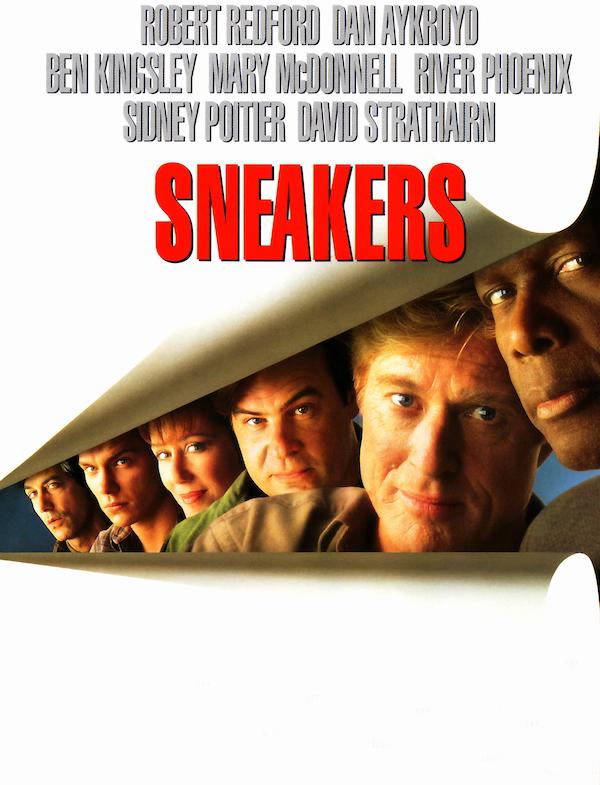
James Horner’s Sneakers score gives imagination a musical life, and lets us feel the threat of its closure.
The Living Film is my conception of cinema as an organic expression of a character’s interior life.
When a character struggles, consciously or unconsciously, toward a life that has remained unlived, the film begins to generate its own dramatic necessity. That struggle produces the character’s actions and the unfolding narrative, but it also organizes the entirety of cinematic expression: performance, framing, movement, design, rhythm, editing, sound, and music. These are dimensions of the same interior dramatic event.
A living film takes its form from within. Its world emerges from the particular nature of the character’s becoming: what they fear, desire, resist, discover, and cannot yet bear to know. The filmworld is therefore more than a setting for the drama. It is the drama extending into image, sound, space, and time.
Whether the character’s quest succeeds or fails, it is their active struggle with the unlived life that gives the film its vitality. The Living Film proposes that the unity of a cinematic work arises from this organic principle: the whole expressive world grows from the interior dramatic life of the person at its center.
Maturational Narrative explores the dramatic process through which a person encounters, and potentially begins to live, possibilities of themselves that have previously remained unlived.
Every character enters a story with an established psychic organization: characteristic ways of feeling, perceiving, defending, relating, and acting. This organization has made their existing life possible, while leaving other possibilities of being outside their lived experience. Drama brings that existing person into consequential contact with circumstances that place their familiar ways of living under pressure.
Each successive action arises as the character’s most available attempt to manage the feelings and consequences of what has just occurred. Those actions generate new circumstances, new experiences, and further choices. Narrative progression therefore acquires a deeper continuity: the unfolding logic of the character’s psychic life.
Through this process, a previously unlived possibility of self may become enacted in the world. The character may embrace it, resist it, partially integrate it, or fail to accommodate it altogether. Maturation does not necessarily mean improvement or happiness, and the earlier self does not simply disappear. Dramatic becoming concerns the changing relationship between the person who has lived and the person who might yet live.
In this conception, drama makes possible personhood real through consequential action. Its fundamental movement is the encounter between an existing life and the life that remains to be lived.
Reflections on cinema, dramatic life, character, music, and the films that inspire me. Some are developed essays; others are observations, discoveries, and thoughts in progress.
James Horner’s Sneakers score gives imagination a musical life, and lets us feel the threat of its closure.
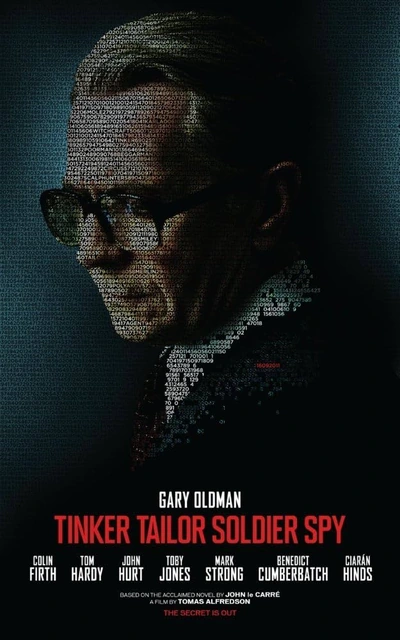
Psychological integrity and the integration of sound, image, score, and craft in Tinker Tailor Soldier Spy.
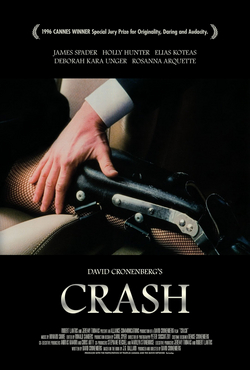
Howard Shore’s Crash score, its erotic and technological sonic world, and its relationship to film images.
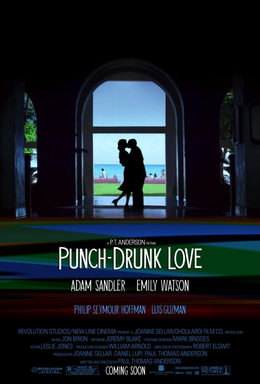
Character, consequences, and Barry’s inner music in Punch-Drunk Love.
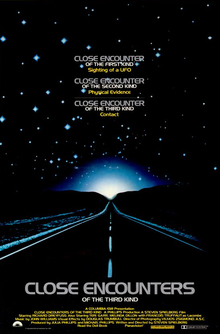
Attunement, image, rhythm, and John Williams’s score in Close Encounters of the Third Kind.
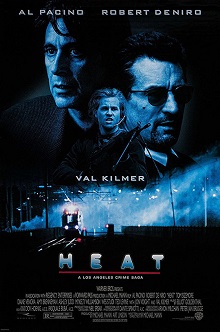
Independence and human connection as the opposing mental principles of Neil and Vincent in Heat.
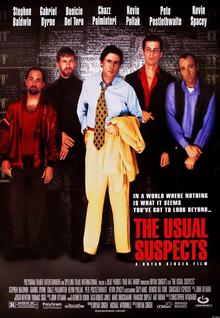
The contrasting musical and narrative worlds of The Usual Suspects and Pulp Fiction.
Vulnerability, institutional cynicism, and human fragility in A Most Wanted Man.
Gendered character roles and the integrated visual, sound, and score language of The X-Files Season One.
Mayor Vaughn’s character change and the protagonists’ different journeys in Jaws.
The Usual Suspects and Pulp Fiction inhabit diametrically opposed musical universes, each film’s sonic landscape embodying its narrative ethos and aesthetic lineage with almost diagrammatic clarity.
Sneakers is a celebration of imagination. Its computer hackers use imagination to solve their difficulties and to define themselves. Their opponents want to pin things down and control them. The drama places a value we care about under threat: the freedom to play.
There’s a danger in a film about cryptography and computer security. Concentrate on the machinery and you can end up giving the audience a lecture. We can follow how a device works without caring about anyone. James Horner finds the human core of all this cleverness, and scores that.
When I first saw Sneakers as a teenager, its musical texture excited me terribly. It still does. I can’t think of another score that floats quite like it.
The opening titles give us scrambled words, then reveal what they mean. An anagram. An answer. Another anagram, another answer. Before we’ve met anyone, the film invites us to be curious.
Horner gives this game to a saxophone, entirely on its own. The phrases skip along, pause, and start again. Their shape mirrors the shape of the idea onscreen. We hear something, wait, receive something. The score makes the act of discovery accessible and human.
The choice of instrument matters as much as the phrase structure. Imagine the same thing on a clarinet. It would feel too serious. Here, the saxophone’s jazz inflection gives us freedom, and its light rhythm dances through the puzzles. We begin to share the pleasure these people take in what they do.
As the film opens out, Horner draws on American minimalism and jazz to make a world of effervescent activity. There is a great deal going on without much harmonic travel. The music stays within a general harmonic area while its figures keep moving. It feels like creativity ticking over.
The voices are essential to this. High up, skipping, almost featherlike, they help the whole score float. They mingle with the woodwinds and strings as part of the instrumental texture. We hear people’s voices without being asked to stop and attend to a singer delivering a melody.
I hear something of John Adams in this use of voices and repetition. Horner takes that stylistic possibility and does what he wants with it. The result belongs to the people in this film: a small, close, friendly ensemble. The delicacy of the scoring gives their companionship a musical form. We can hear what they value in the way their music behaves.
There is sadness within this floating register. In the opening flashback, Cosmo is caught while his friend escapes. A descending line in the upper violins introduces a slight chromaticism, a little pain. Its lack of vibrato gives it a darker, exposed quality amid the surrounding buoyancy.
That matters. These people have a past, and the past has consequences. Sneakers sustains a lightness of tone without requiring us to believe that everything is happy. The music can carry the hurt within the larger feeling of the film.
The first few minutes establish that tonal character. If the score gave itself over completely to the misery of the arrest, it would promise us a different film. Horner allows the event to trouble the music while keeping its imaginative life in motion.
Later, when the team discovers that the men claiming to represent the NSA have deceived them, the musical world changes. The floating minimalism disappears. I miss it immediately. Its absence feels like a hole.
Low piano unsettles us. Heavy percussion enters, and chromatic clusters disturb the space that had felt so open. Above it, an insistent woodblock keeps going. The music is destabilizing and, at the same time, more insistently organized. Something is imposing itself.
Even the saxophone changes. Its playful material is squeezed into chromatic shapes that make us uncomfortable. We recognize the voice, but hear what is happening to it. This is what gives the threat its meaning. We’ve already experienced the freedom these people live by; now we feel it being constricted.
The score establishes a language and lets that language undergo the drama. These musical decisions are metaphors. When a phrase leaves something incomplete, we feel its incompletion, and the uncertainty of the story becomes ours. The film can make us curious, or uneasy, through the way a few notes behave.
This is how I feel a good score working: coming from within the film, from whatever makes it seem alive. Its decisions belong to the same mind as the images and the characters. An unusual texture means very little in itself. In Sneakers, Horner finds a texture that lets us feel these people’s imaginative life, including its pain and vulnerability. We enjoy being in their company, and we care when their music loses its freedom.
The Craft of Enacted Thought
Dramatic Form explores how a film acquires its dramatic life through the unfolding relationship between character, action, and the world.
Every scene places a character’s existing ways of feeling, knowing, and relating under pressure. Their response creates a new state of affairs, which becomes the starting condition of the next scene. Narrative develops through this continuous movement of psychic cause and consequence, as characters encounter experiences that challenge their established sense of themselves and their world.
The course examines the relationship between individual dramatic scenes and the form of the whole film: how genre establishes a world of possibilities and moral values; how dramatic encounters reveal and develop the psychological texture of characters; and how successive actions accumulate into a larger process of transformation, integration, or tragedy.
For writers, directors, and film creatives, Dramatic Form offers an understanding of dramatic structure as something generated from within the unfolding life of the film itself. Its central concern is cinema as enacted thought: the transformation of interior human experience into consequential dramatic action.
Explore Dramatic FormA Cinematic Sensibility
Dramatic Score explores film music as a form of dramatic insight: an expressive intelligence participating in the inner life of cinema.
Music can embody a character’s experience, reveal what remains unspoken, conceal a truth, deepen an ambiguity, or contradict what the image appears to tell us. It can reinforce, complicate, or transform our understanding of a dramatic moment. In these ways, music becomes an active participant in the film’s thinking, rather than merely an accompaniment to its images and emotions.
The course approaches cinema as an integrated expressive organism, in which character, story, performance, image, editing, sound, and music belong to a single developing world. It examines how musical choices acquire their meaning through their relationships with that world: its particular psychology, values, tensions, rhythms, and unfolding dramatic life.
Designed for composers and filmmakers, Dramatic Score develops cinematic sensibility: the ability to perceive what a film is, what it needs, and what music can uniquely contribute to its dramatic becoming. Its central concern is the composer’s capacity to think cinematically, discovering music that arises organically from the film’s own interior life.
Explore Dramatic Score