Good Films
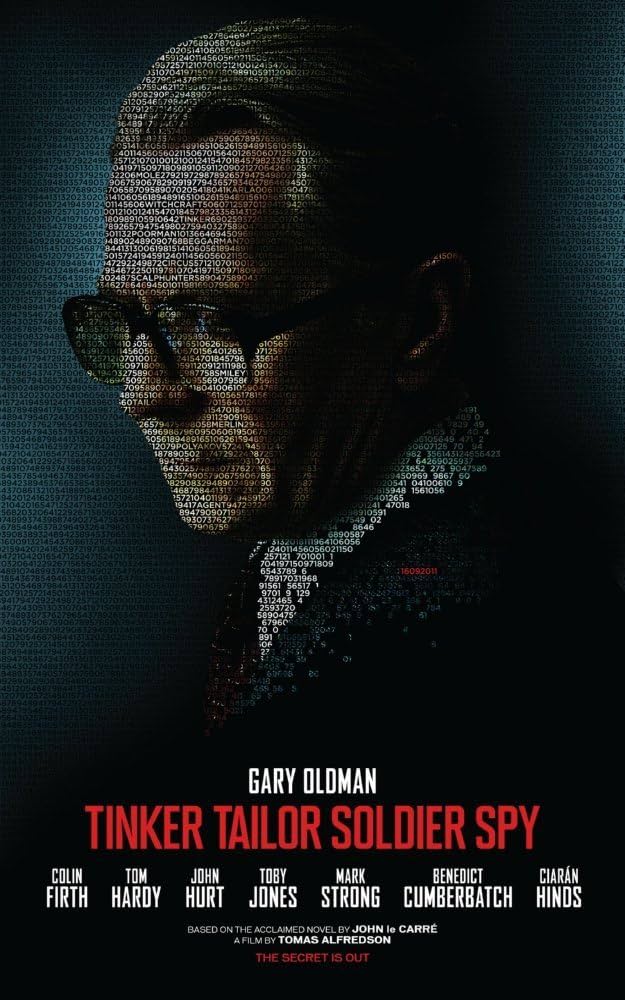
Psychological integrity and the integration of sound, image, score, and craft in Tinker Tailor Soldier Spy.
The Living Film is my conception of cinema as an organic expression of a character’s interior life.
When a character struggles, consciously or unconsciously, toward a life that has remained unlived, the film begins to generate its own dramatic necessity. That struggle produces the character’s actions and the unfolding narrative, but it also organizes the entirety of cinematic expression: performance, framing, movement, design, rhythm, editing, sound, and music. These are dimensions of the same interior dramatic event.
A living film takes its form from within. Its world emerges from the particular nature of the character’s becoming: what they fear, desire, resist, discover, and cannot yet bear to know. The filmworld is therefore more than a setting for the drama. It is the drama extending into image, sound, space, and time.
Whether the character’s quest succeeds or fails, it is their active struggle with the unlived life that gives the film its vitality. The Living Film proposes that the unity of a cinematic work arises from this organic principle: the whole expressive world grows from the interior dramatic life of the person at its center.
Maturational Narrative explores the dramatic process through which a person encounters, and potentially begins to live, possibilities of themselves that have previously remained unlived.
Every character enters a story with an established psychic organization: characteristic ways of feeling, perceiving, defending, relating, and acting. This organization has made their existing life possible, while leaving other possibilities of being outside their lived experience. Drama brings that existing person into consequential contact with circumstances that place their familiar ways of living under pressure.
Each successive action arises as the character’s most available attempt to manage the feelings and consequences of what has just occurred. Those actions generate new circumstances, new experiences, and further choices. Narrative progression therefore acquires a deeper continuity: the unfolding logic of the character’s psychic life.
Through this process, a previously unlived possibility of self may become enacted in the world. The character may embrace it, resist it, partially integrate it, or fail to accommodate it altogether. Maturation does not necessarily mean improvement or happiness, and the earlier self does not simply disappear. Dramatic becoming concerns the changing relationship between the person who has lived and the person who might yet live.
In this conception, drama makes possible personhood real through consequential action. Its fundamental movement is the encounter between an existing life and the life that remains to be lived.
Reflections on cinema, dramatic life, character, music, and the films that inspire me. Some are developed essays; others are observations, discoveries, and thoughts in progress.
Psychological integrity and the integration of sound, image, score, and craft in Tinker Tailor Soldier Spy.
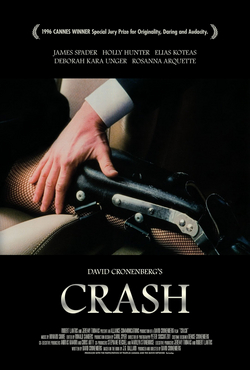
Howard Shore’s Crash score, its erotic and technological sonic world, and its relationship to film images.
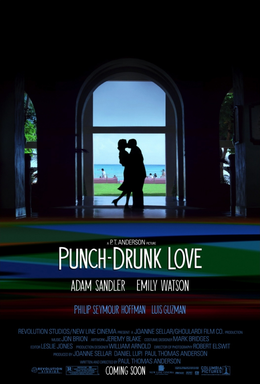
Character, consequences, and Barry’s inner music in Punch-Drunk Love.
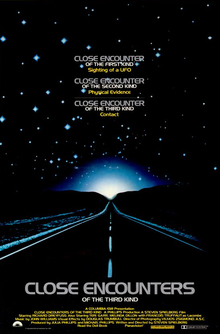
Attunement, image, rhythm, and John Williams’s score in Close Encounters of the Third Kind.
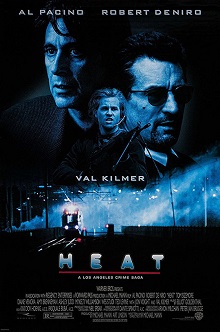
Independence and human connection as the opposing mental principles of Neil and Vincent in Heat.
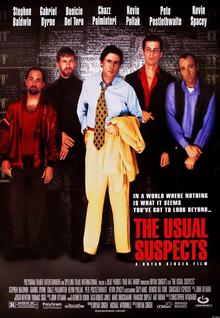
The contrasting musical and narrative worlds of The Usual Suspects and Pulp Fiction.
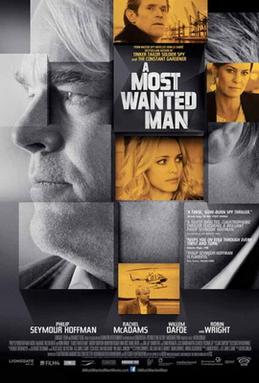
Vulnerability, institutional cynicism, and human fragility in A Most Wanted Man.
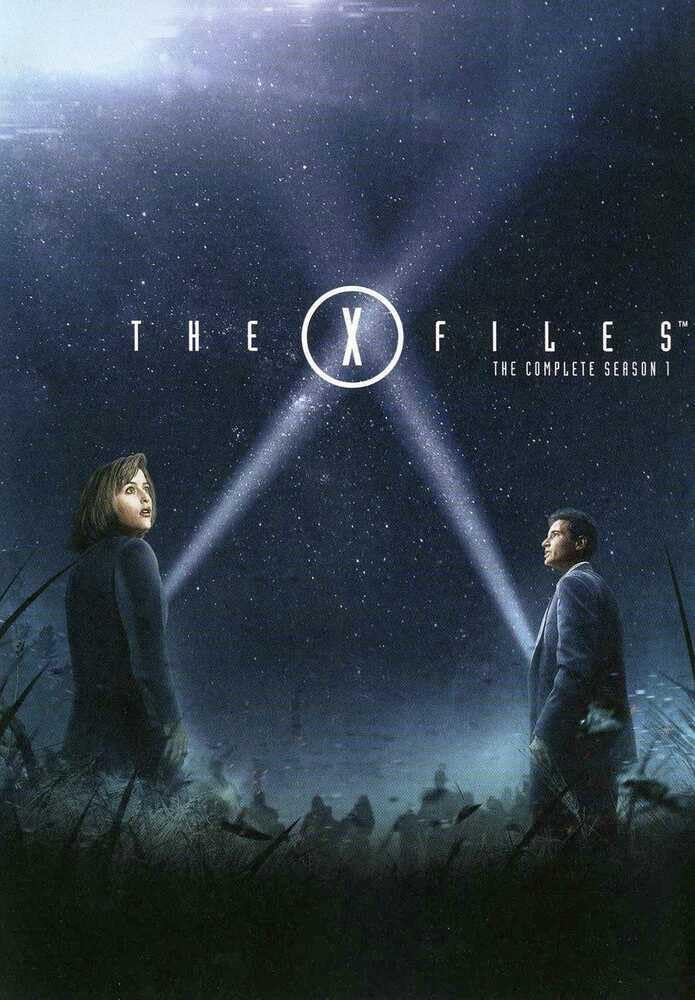
Gendered character roles and the integrated visual, sound, and score language of The X-Files Season One.

Mayor Vaughn’s character change and the protagonists’ different journeys in Jaws.
The Usual Suspects and Pulp Fiction inhabit diametrically opposed musical universes, each film’s sonic landscape embodying its narrative ethos and aesthetic lineage with almost diagrammatic clarity.
Close Encounters is about feeding, not conquest.
Its drama is the story of a hunger being answered, rather than a heroic reclamation or destruction of an opposing force.
To illustrate how Spielberg and composer John Williams construct a unified cinematic field that expresses this core dramatic move, we can trace key audiovisual techniques and explain the dramatic work each one performs: how each turn in craft advances the journey from lack to being deeply met.
The film begins in darkness with a single unison tone, before any image appears, so our first experience is not information but pressure. This choice teaches us to read what follows as relief to strain, rather than mere plot. When forms do arrive they feel like answers to a need that has already been established in our body; this is precisely the drama the ending will and must resolve.
Roy’s compulsive shaping of the mountain, first in mashed food, then in wire, clay, and garden debris, comes from an implanted vision, a sense that something outside him will satiate him. Psychoanalysts believe this is the most fundamental preconception that we possess. It is the foundation for all communications between human beings, from infancy onwards. In Close Encounters, Devil’s Tower operates as an imago of such an object, a pre-verbal shape in the mind that the psyche recognizes before it can name it. By letting compulsion register as a necessity for us and the protagonists, the film aligns us deeply with Roy’s orientation. The final encounter will feel like fulfilment of this recognition rather than ‘the solution to a puzzle’. Usually films ‘solve problems’, whereas Close Encounters is compelled by that which underlies all problems: the hunger for satiation.
Against this hunger, the film stages a foil in the complex domestic sphere and the authoritative paternal order. Roy’s home is loud with televisions, fluorescent spill, and criss-crossed wishes. Extending this narrative space, the government’s bureaucratic apparatus adds procedure, masks, and a false toxin scare. Williams’s music is far more ordered and strict: martial drums, organized looping figures. This is the paternal order trying to manage anxiety through control and noise, to suppress hunger itself. It is made to fail in both registers, so that another mode of containment can appear: the maternal. It is the maternally satiating that Roy, Jillian, and Lacombe seek. By working to exhaust this zone of ‘command’, the film clears a space for reception as an alternative to domination.
Williams’s five-note motif (mapping uncannily onto the five letters of ‘hello’, its 3rd and 4th notes repeated an octave apart) is deliberately legible at the level of the child. Anyone can play it, understand it, repeat it, hum it, and deeply answer it. Spielberg lets it exist both inside the diegetic story world itself (Barry plays it on the xylophone, Jillian hums it, synths declaim it at the finale) and around it (the non-diegetic orchestra). This dissolves the seam between space inside and outside the film, in an almost unique way in film scoring. It positions music not as ‘accompaniment’ but as carrying the medium of recognition itself for us and protagonists, so that our hearing of the motif becomes participation in the act of meeting. We’re pulled into the same journey as the characters we love.
Williams maps this psychological journey onto harmony: early cues slip tonally and delay cadences, creating a felt scarcity; mid-film the five notes stabilise and centres clarify; at the mountain the harmony opens into pandiatonic fullness, all seven diatonic degrees sounding without rigid hierarchy, so the ear hears inclusion rather than victory. The sonic message of the ending is ‘nothing excluded,’ which is what being held, heard, and fed feels like.
Timbre does the maternal labor. Low brass and contrabass winds carry weight and threat; upper strings, harp, celesta, and glockenspiel trace precise, caring contours; a wordless choir offers the pre-linguistic voice of welcome; colours bridge human breath and electronic reply. Reverb and distance are shaped dramaturgically so sounds move from far to near, outside to inside, until the world itself seems to listen back and include us within its acoustic room.
Visually, faces are repeatedly lit by off-screen radiance, and low angles tilt attention towards an answering above; at home, sodium glare and cluttered frames make cognition feel over-saturated, while at the mountain the palette cleans to clarified whites and saturated primaries. These choices convert looking from interrogation to reception: the image adopts the same posture as the musical harmony, promising that what was scattered will become legible and kind.
The film’s rhythmic design mirrors the journey of the act of feeding: long crescendi and pedal points create expectancy; phrase lengths widen as trust grows; silences puncture spectacle so the meeting can be felt. The cadence of visual cuts quietly aligns with musical breath, letting images ‘exhale’ as harmony relaxes from hunger and governmental tension. Anxiety is gradually converted by Spielberg and Williams into expectancy, so when the answer arrives it lands as relief rather than shock.
Like the conversation between mother and infant, a call-and-response is staged literally at the mountain finale. Humans and mothership trade the five musical notes as connection itself. They develop like coos becoming words, testing transpositions and widening phrase endings as confidence blooms. Orchestral timbres and synthesised tones answer one another until their articulations match, painting their mutual calibration. The scene refuses ‘supremacy’ on either side. There are no winners or losers. Two subjectivities negotiate a shared utterance, which is the film’s core aim enacted in real time.
In the finale, color and sound fuse. Color behaves like chords and brightness like register. Light pulses synchronize to the onscreen score’s pitched phrases until their timing and contours become one. When this light performs as orchestration and sound behaves like architecture, integration ceases to be an idea and instead becomes our very perception. Here, cinema itself turns into the maternal moment, different elements held together without remainder, so Spielberg’s core thesis is felt as a single ‘cinematic instrument’ playing across sight and sound.
The finale unfolds as an extended adagio: time dilates, cadence is withheld and finally joyously granted, and Roy leaves satiated. The film reframes an arc of self-assertion as an arc of being received (selection by attunement, not by merit), and acknowledges loss so that the answer does not curdle into omnipotent fantasy. Satiation, deep inner fulfilment, is actually achieved.
Beneath all the spectacle hums a private wish for attunement, one-ness. Spielberg’s biography is not dramatised directly here, though it was later in his far less dramatic film The Fabelmans. Here, it is transformed into cinematic materials: timbre, interval, pulse, colour, duration. By carrying longing into the fabric of the work rather than into some blatant form of ‘confession’, this film universalises the wish for connection. Viewers do not merely interpret fulfilment; they undergo it audiovisually, through the medium of cinema.
All these techniques fuse the whole into one cinematic process. The Image supplies the orienting primal representation of communion. The score’s diegetic location and motivic approach teach the ear what inclusion sounds like. The camera, from darkness to kaleidoscopic light, adopts the posture of welcome. Rhythm converts anxiety into arrival. Spielberg and Williams fuse psychology with their craft so fully that Close Encounters performs a meeting upon the audience. We are left satiated and inwardly joyous, rather than outwardly triumphant. There are few films that do this, and fewer that do it so utterly completely.
The Craft of Enacted Thought
Dramatic Form explores how a film acquires its dramatic life through the unfolding relationship between character, action, and the world.
Every scene places a character’s existing ways of feeling, knowing, and relating under pressure. Their response creates a new state of affairs, which becomes the starting condition of the next scene. Narrative develops through this continuous movement of psychic cause and consequence, as characters encounter experiences that challenge their established sense of themselves and their world.
The course examines the relationship between individual dramatic scenes and the form of the whole film: how genre establishes a world of possibilities and moral values; how dramatic encounters reveal and develop the psychological texture of characters; and how successive actions accumulate into a larger process of transformation, integration, or tragedy.
For writers, directors, and film creatives, Dramatic Form offers an understanding of dramatic structure as something generated from within the unfolding life of the film itself. Its central concern is cinema as enacted thought: the transformation of interior human experience into consequential dramatic action.
Explore Dramatic FormA Cinematic Sensibility
Dramatic Score explores film music as a form of dramatic insight: an expressive intelligence participating in the inner life of cinema.
Music can embody a character’s experience, reveal what remains unspoken, conceal a truth, deepen an ambiguity, or contradict what the image appears to tell us. It can reinforce, complicate, or transform our understanding of a dramatic moment. In these ways, music becomes an active participant in the film’s thinking, rather than merely an accompaniment to its images and emotions.
The course approaches cinema as an integrated expressive organism, in which character, story, performance, image, editing, sound, and music belong to a single developing world. It examines how musical choices acquire their meaning through their relationships with that world: its particular psychology, values, tensions, rhythms, and unfolding dramatic life.
Designed for composers and filmmakers, Dramatic Score develops cinematic sensibility: the ability to perceive what a film is, what it needs, and what music can uniquely contribute to its dramatic becoming. Its central concern is the composer’s capacity to think cinematically, discovering music that arises organically from the film’s own interior life.
Explore Dramatic Score